- Basic structure and function of cells
- Integrating cells into tissues
- Nervous system
- Blood, lymphoid tissues and haemopoiesis
- Functional anatomy of the musculoskeletal system
- Smooth muscle and the cardiovascular and lymphatic systems
صفحه
مدرسه پزشکی

Gray's Anatomy: The Anatomical Basis of Clinical Practice
In 1858, Drs Henry Gray and Henry Vandyke Carter created a book for their surgical colleagues that established an enduring standard among anatomical texts. After more than 160 years of continuous publication, Gray’s Anatomy remains the definitive, comprehensive reference on the subject, offering ready access to the information you need to ensure safe, effective practice. This 42nd edition has been meticulously revised and updated throughout, reflecting the very latest understanding of clinical anatomy from the world’s leading clinicians and biomedical scientists.The book’s acclaimed, lavish art programme and clear text has been further enhanced, while major advances in imaging techniques and the new insights they bring are fully captured in state of the art X-ray, CT, MR and ultrasonic images. The accompanying eBook version is richly enhanced with additional content and media, covering all the body regions, cell biology, development and embryogenesis – and now includes two new systems-orientated chapters. This combines to unlock a whole new level of related information and interactivity, in keeping with the spirit of innovation that has characterised Gray’s Anatomy since its inception.
درخواست و رزرو جلسه مصاحبهویژگی ها این کتاب

The Definitive Anatomy Reference
در سراسر جهان به عنوان معتبرترین منبع برای تسلط بر آناتومی انسان و ساختار بالینی شناخته شده است.
Clinically Focused & Evidence-Based
دانش آناتومی را با عملکرد بالینی مدرن، تشخیص و کاربردهای جراحی پیوند میدهد.
Exceptional Details and Precision
شامل تصاویر دقیق، آناتومی مقطعی و توضیحات جامع آناتومیکی است.
Trusted by Medical Professionals Worldwide
مرجعی اساسی که توسط دانشجویان پزشکی، مربیان، جراحان و متخصصان مراقبتهای بهداشتی در سراسر جهان استفاده میشود.
Contents
- Preimplantation development
- Implantation and placentation
- Cell populations at gastrulation
- Overarching concepts in development
- Cell populations at the start of organogenesi
- Development of the heart and circulation
- Nervous system: overview
- Meninges and ventricular system
- Blood supply of the brain
- Spinal cord: internal organization
- Brainstem
- Cerebellum
- Head and neck: overview and surface anatomy
- The skull
- Neck
- Face and scalp
- Mouth
- Infratemporal and pterygopalatine fossae and temporomandibular joint
- Back
- Spinal cord and spinal nerves: gross anatomy
- Orbit and accessory visual apparatus
- Development of the back
- Development of the head and neck
- Pectoral girdle and upper limb: overview and surface anatomy
- Shoulder girdle and arm
- Elbow and forearm
- Wrist and hand
- Thorax: overview and surface anatomy
- Chest wall and breast
- Pleura, lungs, trachea and bronchi
- Respiratory diaphragm and phrenic nerves
- Mediastinum
- Heart
- Abdomen and pelvis: overview and surface anatomy
- Anterior abdominal wall
- Posterior abdominal wall and retroperitoneal space
- Peritoneum, mesentery and peritoneal cavity Gastrointestinal Tract
- Abdominal oesophagus and stomach
- Suprarenal (adrenal) gland Urogenital System
- Pelvic girdle and lower limb: overview and surface anatomy
- Pelvic girdle, hip, gluteal region, and thigh
- Knee and leg
- Ankle and foot
نمونه ای از آنچه خواهید آموخت
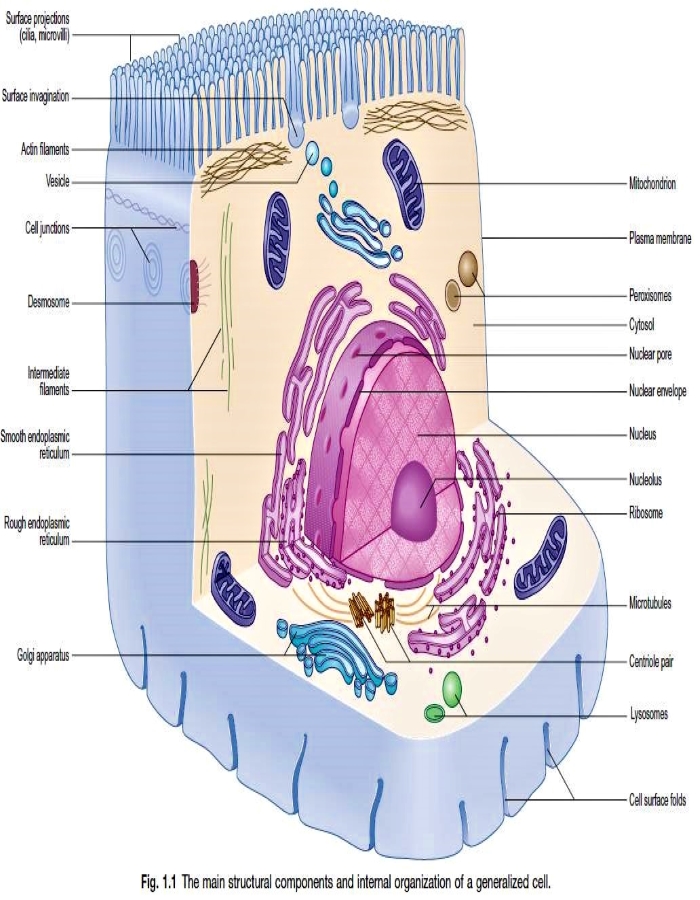
Cells
The shapes of mammalian cells vary widely depending on their interactions with each other, their extracellular environment and internal structures. Their surfaces are often highly folded when absorptive or transport functions take place across their boundaries. Cell size is limited by rates of diffusion, either that of material entering or leaving cells, or that of diffusion within them. Movement of macromolecules can be much accelerated and also directed by processes of active transport across the plasma membrane and by transport mechanisms within the cell. According to the location of absorptive or transport functions, apical microvilli or basolateral infoldings create a large surface area for transport or diffusion. Motility is a characteristic of most cells, in the form of movements of cytoplasm or specific organelles from one part of the cell to another
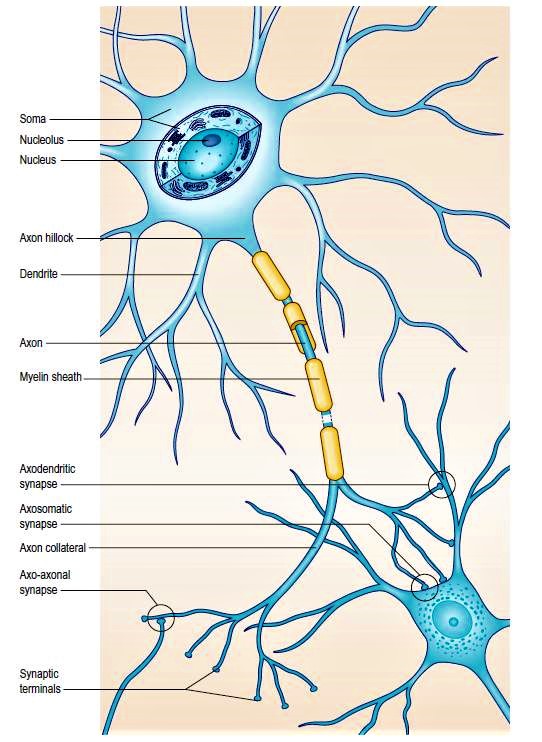
Neurones
Most of the neurones in the CNS are either clustered into nuclei, columns or layers, or dispersed within grey matter. Neurones in the PNS are confined to ganglia. Irrespective of location, neurones share many general features, which are discussed here in the context of central neurones. Special characteristics of ganglionic neurones and their adjacent tissues are discussed on p. 60. Neurones exhibit great variability in their size (cell bodies range from 5 to 100 μm diameter) and shape (Spruston 2008). Their surface areas are extensive because most neurones display numerous branched cell processes. They usually have a rounded or polygonal cell body (perikaryon or soma). This is a central mass of cytoplasm that encloses a nucleus and gives off long, branched extensions with which most intercellular contacts are made
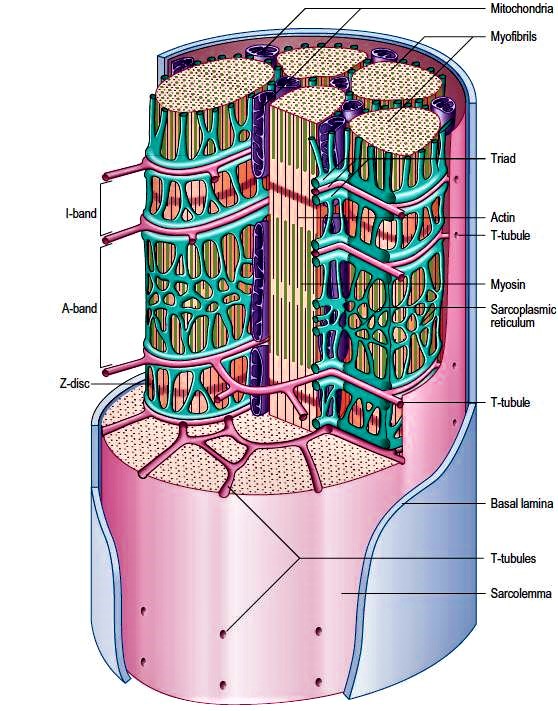
Muscle Cells
Muscle cells (‘fibres’) are also known as myocytes (the prefixes myo- and sarco- are frequently used in naming structures associated with muscle). They differentiate along one of three main pathways to form skeletal, cardiac or smooth muscle. Both skeletal and cardiac muscle may be called striated muscle, because their myosin and actin filaments are organized into regular, repeating structures (sarcomeres), which give the cells a finely cross-striated appearance when viewed microscopically. Cardiac muscle fibres are relatively short, with branched ends, and are joined to adjacent fibres at intercellular junctional complexes called intercalated discs, which skeletal muscle lacks. Smooth muscle cells lack striations because their actin and myosin are not organized into sarcomeres
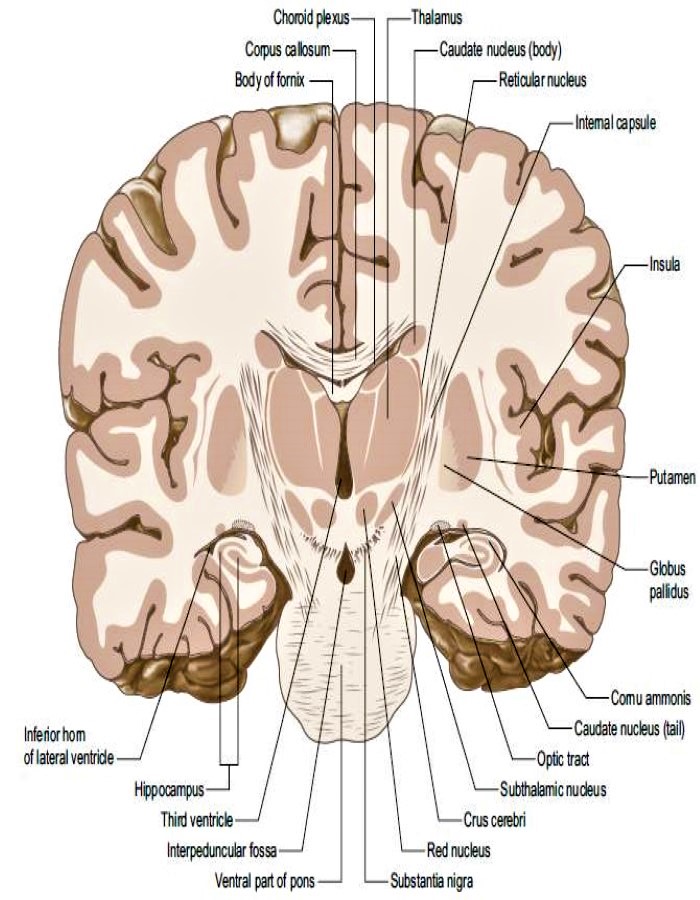
Thalamus
The thalamus plays a crucial role in many brain functions, serving as a processing and distribution centre, relaying and regulating information from the outside world and the internal milieu to the cerebral cortex and sustaining cortico-thalamo-cortical communication. It is involved in multiple activities, including consciousness, sleep, attention, memory and sensory and motor functions. Our increasing understanding of the role of the thalamus is providing insights into pathological disorders of the brain and is opening up the possibility of targeting its various constituent nuclei to treat a variety of disorders, including epilepsy, Parkinson’s disease, pain and psychiatric disorders
مدرسه پزشکی در مسیر موفقیت فرزندتان

فرم درخواست رزرو مصاحبه
شروع کلاس های جدید مدرسه پزشکی در مرداد ماه سال 1405
تمرکز اصلی بر روزهای چهارشنبه، پنجشنبه و جمعه
حضوری تهران و همزمان آنلاین در سراسر کشور
36 ماه آموزش تخصصی
پشتیبانی هر روزه در طول این 36 ماه آموزش تخصصی