- The Chemical Context of Life
- Water and Life
- Carbon and the Molecular Diversity of Life
- The Structure and Function of Large Biological Molecules
صفحه
مدرسه پزشکی

Campbell Biology
Campbell Biology delivers a trusted, current and pedagogically innovative experience that has provided millions of students with a solid foundation in college-level biology and with a true understanding of biology. The author team advances Neil Campbell's original vision of equipping students such as you at individual skill levels with tools, visuals, resources, and activities that engage you in learning. This solution strategically integrates text and artwork to reinforce key concepts, build scientific skills and promote active learning.
درخواست و رزرو جلسه مصاحبهویژگی های این کتاب

Comprehensive Biological Coverage
تمام زمینههای اصلی زیستشناسی، از مولکولها و سلولها گرفته تا اکوسیستمها و تکامل را پوشش میدهد.
Clear and Engaging Explanations
مفاهیم پیچیده زیستی را با توضیحات منطقی و مناسب برای دانشآموزان، به درسهایی آسان برای فهم تبدیل میکند.
Stunning Scientific Illustrations
شامل هزاران نمودار، عکس و مدلهای بصری با کیفیت بالا که زیستشناسی را به زندگی واقعی میآورد.
Trusted All Over The Worldwide
کتاب درسی زیستشناسی پیشرو که توسط میلیونها دانشجو و مربی در دانشگاههای برتر سراسر جهان استفاده میشود.
Contents
- A Tour of the Cell
- Membrane Structure and Function
- An Introduction to Metabolism
- Cellular Respiration and Fermentation
- Photosynthesis
- Cell Communication
- The Cell Cycle
- Meiosis and Sexual Life Cycles
- Mendel and the Gene Idea
- The Chromosomal Basis of Inheritance
- The Molecular Basis of Inheritance
- Gene Expression: From Gene to Protein
- Regulation of Gene Expression
- Viruses
- DNA Tools and Biotechnology
- Genomes and Their Evolution
- Descent with Modification: A Darwinian View of Life
- The Evolution of Populations
- The Origin of Species
- The History of Life on Earth
- Phylogeny and the Tree of Life
- Bacteria and Archaea
- Protists
- Plant Diversity I: How Plants Colonized Land
- Plant Diversity II: The Evolution of Seed Plants
- Fungi
- An Overview of Animal Diversity
- An Introduction to Invertebrates
- The Origin and Evolution of Vertebrates
- Vascular Plant Structure, Growth, and Development
- Resource Acquisition and Transport in Vascular Plants
- Soil and Plant Nutrition
- Angiosperm Reproduction and Biotechnology
- Plant Responses to Internal and External Signals
- Basic Principles of Animal Form and Function
- Animal Nutrition
- Circulation and Gas Exchange
- The Immune System
- Osmoregulation and Excretion
- Hormones and the Endocrine System
- Animal Reproduction
- Animal Development
- Neurons, Synapses, and Signaling
- Nervous Systems
- An Introduction to Ecology and the Biosphere
- Population Ecology
- Community Ecology
- Ecosystems and Restoration Ecology
- Conservation Biology and Global Change
نمونه ای از آنچه خواهید آموخت
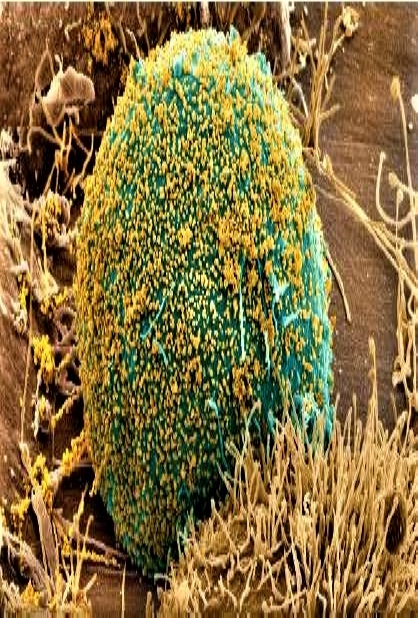
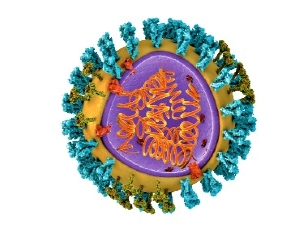
Virus
Compared with eukaryotic and even prokaryotic cells, most viruses are much smaller and simpler in structure. Lacking the structures and metabolic machinery found in a cell, a virus is an infectious particle consisting of little more than genes packaged in a protein coat. Are viruses living or nonliving? Early on, they were considered biological chemicals; the Latin root for virus means “poison.” Viruses can cause a wide variety of diseases, so researchers in the late 1800s saw a parallel with bacteria and proposed that viruses were the simplest of living forms. However, viruses cannot reproduce or carry out metabolic activities outside of a host cell. Most biologists would probably agree that viruses are not alive, but instead exist in a shady area between life-forms and chemicals. The simple phrase used by two researchers describes them aptly: Viruses lead a kind of borrowed life.
Immune Cells
For a pathogen—a bacterium, fungus, virus, or other diseasecausing agent—the internal environment of an animal offers a source of nutrients, a protected setting, and a means of transport to new environments. From the animal’s vantage point, the situation is not so ideal. Fortunately, adaptations have arisen over the course of evolution that protect animals against many pathogens. The body’s defenses make up the immune system, which enables an animal to avoid or limit many infections. (Note that a foreign molecule or cell doesn’t have to be pathogenic to elicit an immune response, but we’ll focus on the immune system’s role in defending against pathogens.) The first lines of defense offered by immune systems help prevent pathogens from gaining entrance to the body. For example, an outer covering, such as skin or a shell, blocks entry by many pathogens.
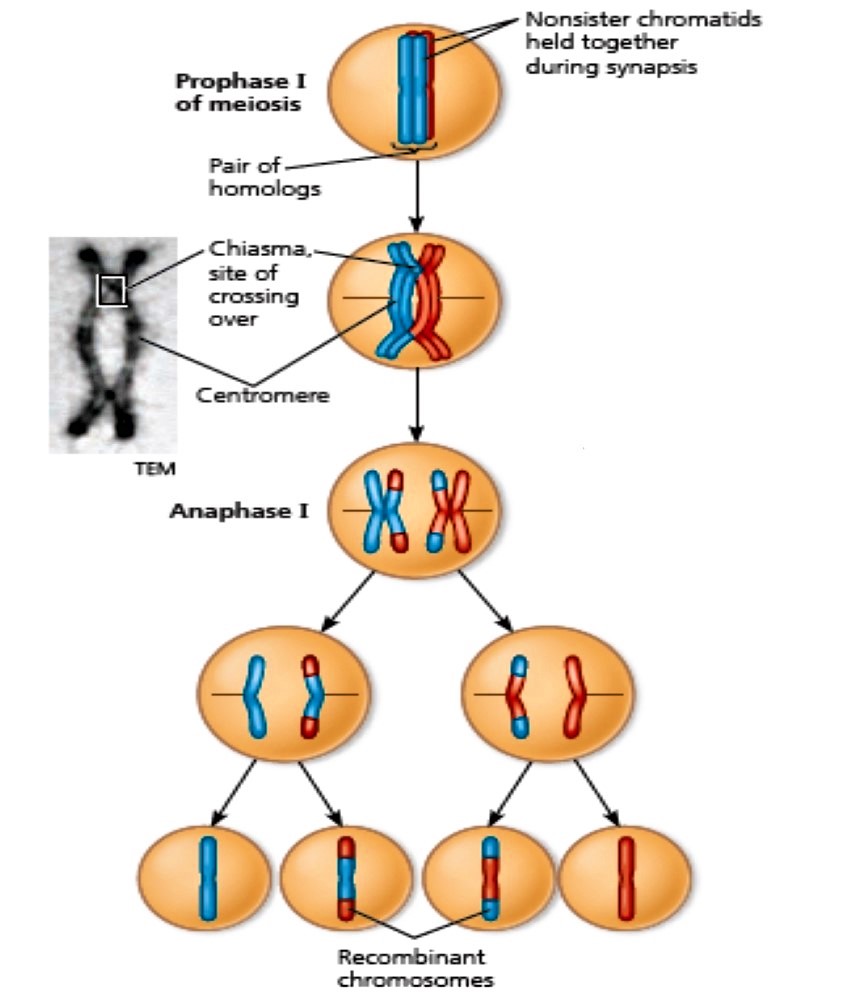
Meiosis
Darwin recognized that a population evolves through the differential reproductive success of its variant members. On average, those individuals best suited to the local environment leave the most offspring, thereby transmitting their genes. Thus, natural selection results in the accumulation of genetic variations favored in a certain environment. As the environment changes, the population may survive if, in each generation, at least some of its members can cope effectively with the new conditions. Mutations are the original source of different alleles, which are then mixed and.matched during meiosis. New and different combinations of alleles may work better than those that previously prevailed. In a stable environment, though, sexual reproduction seems as if it would be less advantageous than asexual reproduction, which ensures perpetuation of successful combinations of alleles.
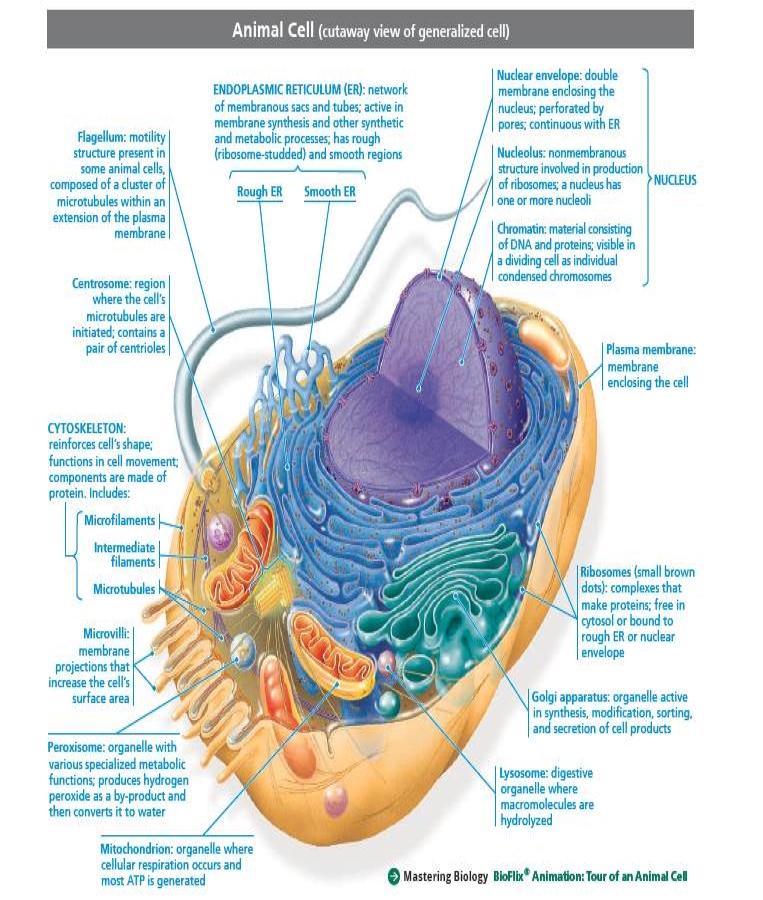
Cells
Cells—the basic structural and functional units of every organism—are of two distinct types: prokaryotic and eukaryotic. Organisms of the domains Bacteria and Archaea consist of prokaryotic cells. Organisms of the domain Eukarya— protists, fungi, animals, and plants—all consist of eukaryotic cells. (“Protist” is an informal term referring to a diverse group of mostly unicellular eukaryotes.)All cells share certain basic features: They are all bounded by a selective barrier, called the plasma membrane (or the cell membrane). Inside all cells is a semifluid, jellylike substance called cytosol, in which subcellular components are suspended. All cells contain chromosomes, which carry genes in the form of DNA. And all cells have ribosomes, tiny complexes that make proteins according to instructions from the genes. A major difference between prokaryotic and eukaryotic cells is the location of their DNA.
مدرسه پزشکی در مسیر موفقیت فرزندتان

فرم درخواست رزرو مصاحبه
شروع کلاس های جدید مدرسه پزشکی در مرداد ماه سال 1405
تمرکز اصلی بر روزهای چهارشنبه، پنجشنبه و جمعه
حضوری تهران و همزمان آنلاین در سراسر کشور
36 ماه آموزش تخصصی
پشتیبانی هر روزه در طول این 36 ماه آموزش تخصصی