- CHAPTER 1: Functional Organization of the Human Body and Control of the “Internal Environment”
- CHAPTER 2: The Cell and Its Functions
- CHAPTER 3: Genetic Control of Protein Synthesis, Cell Function, and Cell Reproduction
صفحه
مدرسه پزشکی

Guyton and Hall Textbook of Medical Physiology
Known for its clear presentation style, single-author voice, and focus on content most relevant to clinical and pre-clinical students, Guyton and Hall Textbook of Medical Physiology, 14th Edition, employs a distinctive format to ensure maximum learning and retention of complex concepts. A larger font size emphasizes core information, while supporting information, including clinical examples, are detailed in smaller font and highlighted in pale blue – making it easy to quickly skim the essential text or pursue more in-depth study. This two-tone approach, along with other outstanding features, makes this bestselling text a favorite of students worldwide.
درخواست و رزرو جلسه مصاحبهویژگی های این کتاب

Comprehensive Physiological Framework
درک کامل و ساختاریافتهای از سیستمهای بدن انسان از سطوح پایه تا پیشرفته ارائه میدهد

Strong Clinical Integration
اصول فیزیولوژیکی را مستقیماً به کاربردهای پزشکی و بالینی در دنیای واقعی متصل میکند.

Deep Scientific Accuracy
توضیحات بسیار دقیق و مبتنی بر شواهد مورد اعتماد در آموزش پزشکی در سراسر جهان ارائه میدهد

Global Medical Standard
به طور گسترده در دانشکدههای پزشکی پیشرو به عنوان مرجع اصلی برای یادگیری فیزیولوژی استفاده میشود
Contents
- CHAPTER 4: Transport of Substances Through Cell Membranes
- CHAPTER 5: Membrane Potentials and Action Potentials
- CHAPTER 6: Contraction of Skeletal Muscle
- CHAPTER 7: Excitation of Skeletal Muscle: Neuromuscular Transmission and
- CHAPTER 8: Excitation and Contraction of Smooth Muscle
- CHAPTER 9: Cardiac Muscle; The Heart as a Pump and Function of the Heart Valves
- CHAPTER 10: Rhythmical Excitation of the Heart
- CHAPTER 11: The Normal Electrocardiogram
- CHAPTER 12: Electrocardiographic Interpretation of Cardiac Muscle and Coronary Blood Flow Abnormalities: Vectorial Analysis
- CHAPTER 13: Cardiac Arrhythmias and Their Electrocardiographic Interpretation
- CHAPTER 14: Overview of the Circulation; Biophysics of Pressure, Flow, and Resistance
- CHAPTER 15: Vascular Distensibility and Functions of the Arterial and Venous Systems
- CHAPTER 16: The Microcirculation and Lymphatic System: Capillary Fluid Exchange, Interstitial Fluid, and Lymph Flow
- CHAPTER 17: Local and Humoral Control of Tissue Blood Flow
- CHAPTER 18: Nervous Regulation of the Circulation, and Rapid Control of Arterial Pressure
- CHAPTER 19: Role of the Kidneys in Long-Term Control of Arterial Pressure and in Hypertension: The Integrated System for Arterial Pressure Regulation
- CHAPTER 20: Cardiac Output, Venous Return, and Their Regulation
- CHAPTER 21: Muscle Blood Flow and Cardiac Output During Exercise; the Coronary Circulation and Ischemic Heart Disease
- CHAPTER 22: Cardiac Failure
- CHAPTER 23: Heart Valves and Heart Sounds; Valvular and Congenital Heart Defects
- CHAPTER 24: Circulatory Shock and Its Treatment
- CHAPTER 25: The Body Fluid Compartments: Extracellular and Intracellular Fluids; Edema
- CHAPTER 26: Urine Formation by the Kidneys: I. Glomerular Filtration, Renal Blood Flow, and Their Control
- CHAPTER 27: Urine Formation by the Kidneys: II. Tubular Reabsorption and Secretion
- CHAPTER 28: Urine Concentration and Dilution; Regulation of Extracellular Fluid Osmolarity and Sodium Concentration
- CHAPTER 29: Renal Regulation of Potassium, Calcium, Phosphate, and Magnesium; Integration of Renal Mechanisms for Control of Blood Volume and Extracellular Fluid Volume
- CHAPTER 30: Acid-Base Regulation
- CHAPTER 31: Diuretics, Kidney Diseases
- CHAPTER 32: Red Blood Cells, Anemia, and Polycythemia
- CHAPTER 33: Resistance of the Body to Infection: I. Leukocytes, Granulocytes, the MonocyteMacrophage System, and Inflammation
- CHAPTER 34: Resistance of the Body to Infection: II. Immunity and Allergy Innate Immunity
- CHAPTER 35: Blood Types; Transfusion; Tissue and Organ Transplantation
- CHAPTER 36: Hemostasis and Blood Coagulation
- CHAPTER 37: Pulmonary Ventilation
- CHAPTER 38: Pulmonary Circulation, Pulmonary Edema, Pleural Fluid
- CHAPTER 39: Physical Principles of Gas Exchange; Diffusion of Oxygen and Carbon Dioxide Through the Respiratory Membrane
- CHAPTER 40: Transport of Oxygen and Carbon Dioxide in Blood and Tissue Fluids
- CHAPTER 41: Regulation of Respiration
- CHAPTER 42: Respiratory Insufficiency—Pathophysiology, Diagnosis, Oxygen Therapy
- CHAPTER 43: Aviation, High-Altitude, and Space Physiology
- CHAPTER 44: Physiology of Deep-Sea Diving and Other Hyperbaric Conditions
- CHAPTER 45: Organization of the Nervous System, Basic Functions of Synapses, and Neurotransmitters
- CHAPTER 46: Sensory Receptors, Neuronal Circuits for Processing Information
- CHAPTER 47: Somatic Sensations: I. General Organization, the Tactile and Position Senses
- CHAPTER 48: Somatic Sensations: II. Pain, Headache, and Thermal Sensations
- CHAPTER 49: The Eye: I. Optics of Vision
- CHAPTER 50: The Eye: II. Receptor and Neural Function of the Retina
- CHAPTER 51: The Eye: III. Central Neurophysiology of Vision
- CHAPTER 52: The Sense of Hearing
- CHAPTER 53: The Chemical Senses—Taste and Smell
نمونه ای از آنچه خواهید آموخت
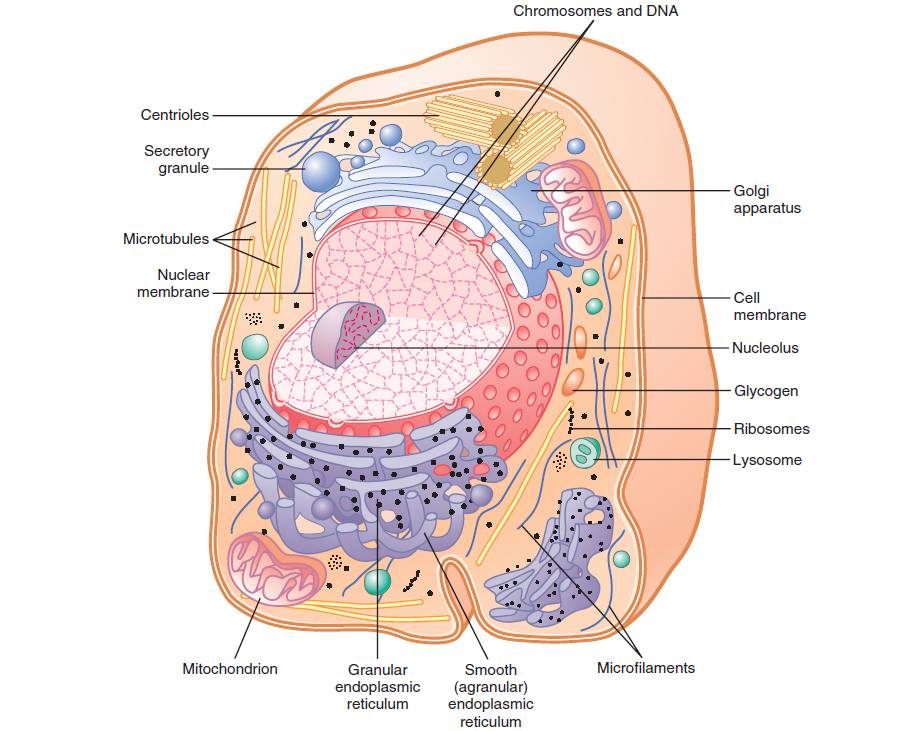
Cells
Each of the 100 trillion cells in a human being is a living structure that can survive for months or years, provided its surrounding fluids contain appropriate nutrients. Cells are the building blocks of the body, providing structure for the body’s tissues and organs, ingesting nutrients and converting them to energy, and performing specialized functions. Cells also contain the body’s hereditary code that controls the substances synthesized by the cells and permits them to make copies of themselves. To understand the function of organs and other structures of the body, it is essential that we first understand the basic organization of the cell and the functions of its component parts.
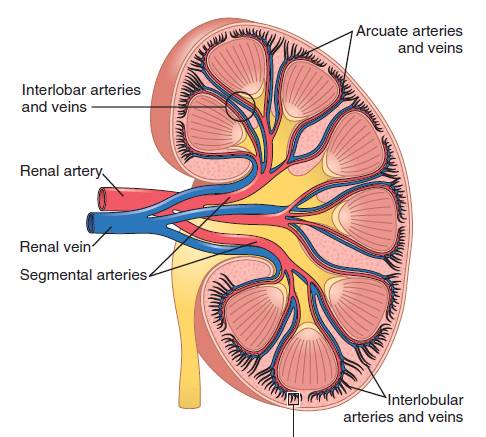
Kidneys
The kidneys perform their most important functions by filtering the plasma and removing substances from the filtrate at variable rates, depending on the needs of the body. Ultimately, the kidneys “clear” unwanted substances from the filtrate (and therefore from the blood) by excreting them in the urine while returning substances that are needed back to the blood. Although this chapter and the next few chapters focus mainly on the control of renal excretion of water, electrolytes, and metabolic waste products, the kidneys serve many important homeostatic functions.
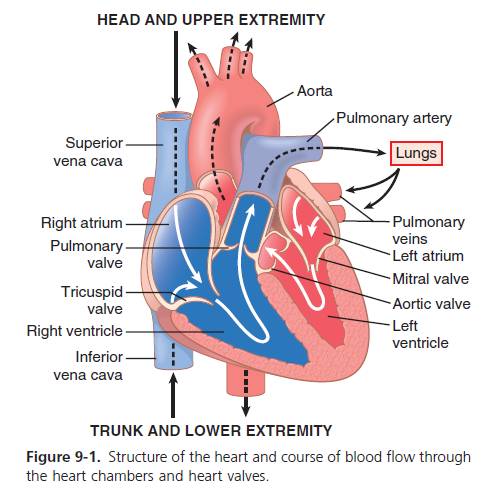
Heart
The heart is composed of three major types of cardiac muscle: atrial muscle, ventricular muscle, and specialized excitatory and conductive muscle fibers. The atrial and ventricular types of muscle contract in much the same way as skeletal muscle, except that the duration of contraction is much longer. The specialized excitatory and conductive fibers of the heart, however, contract only feebly because they contain few contractile fibrils; instead, they exhibit either automatic rhythmical electrical discharge in the form of action potentials or conduction of the action potentials through the heart, providing an excitatory system that controls the rhythmical beating of the heart.
Central Nervous System
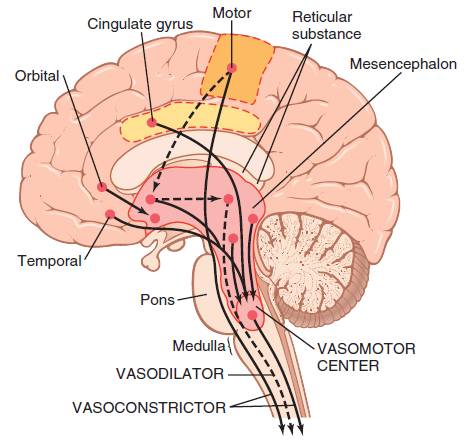
The sympathetic nerves carry tremendous numbers of vasoconstrictor nerve fibers and only a few vasodilator fibers. The vasoconstrictor fibers are distributed to essentially all segments of the circulation, but more to some tissues than to others. This sympathetic vasoconstrictor effect is especially powerful in the kidneys, intestines, spleen, and skin but is much less potent in skeletal muscle and the brain.Vasomotor Center in the Brain and Its Control of the Vasoconstrictor System. Located bilaterally mainly in the reticular substance of the medulla and of the lower third of the pons is an area called the vasomotor center.
مدرسه پزشکی در مسیر موفقیت فرزندتان

فرم درخواست رزرو مصاحبه
شروع کلاس های جدید مدرسه پزشکی در مرداد ماه سال 1405
تمرکز اصلی بر روزهای چهارشنبه، پنجشنبه و جمعه
حضوری تهران و همزمان آنلاین در سراسر کشور
36 ماه آموزش تخصصی
پشتیبانی هر روزه در طول این 36 ماه آموزش تخصصی